Tuesday, September 1, 2009

Dharma Drinks


Marcus was nice enough to let me know that he mentioned me in a post about drinking and the Precepts in Buddhist practice where he quoted a past post of mine. Which is fine. It is a well written post and, as with all posts of merit, it made me think. I would recommend everyone check it out. Here is the quote about me...


Just two weeks ago, in an otherwise excellent blog, a zen practitioner wrote, beneath a photo of two people at a bar, that "sometimes 'skillful means' requires oyster shooters and grotesque amounts of wheat beer". Maybe. But this sounds less like 'skillful means' than 'a skillful excuse' to me. I prefer the advice of Master Thich Naht Hahn: "To persuade one person to refrain from drinking is to make the world safer for us all."


First off, thank you for the complement. "Excellent" is a descriptor I rarely get to hear. But my post was mostly on compassion and positive teaching and very little on beer or drinking so I take some exception on the "otherwise" part of your comment.


Actually, the comment about drinking was simply meant to express the need to expand our understanding of teaching beyond temples, zendos, monasteries and meditation halls. We need to approach all aspects of our lives through a lens of compassion. That even includes drinking and celebrating (which are occurrences in any householder's life) and which are, frankly, aspects of the lives of many Buddhists and non-Buddhists alike so why not apply the same lessons of the Dharma to those situations (Hell, seems like they would be right at home there). I still go to a happy hour every once in a while and sometimes even meet up with some Buddhists and talk Dharma. It is non-traditional but hardly bad. But this does punctuate some points recently made by some other bloggers - That much of our practice is up to our own interpretation and insight rather on what others insist as the proper or "real" way of practicing. The 5th Precept is a great example.


While some approach the precepts from the view of prohibitions I prefer the following view:


The Precepts
The precepts are a condensed form of Buddhist ethical practice. They are often compared with the ten commandments of Christianity, however, the precepts are different in two respects: First, they are to be taken as recommendations, not commandments. This means the individual is encouraged to use his/her own intelligence to apply these rules in the best possible way. Second, it is the spirit of the precepts -not the text- that counts, hence, the guidelines for ethical conduct must be seen in the larger context of the Eightfold Path.

The first five precepts are mandatory for every Buddhist, although the fifth precept is often not observed, because it bans the consumption of alcohol. Precepts no. six to ten are laid out for those in preparation for monastic life and for devoted lay people unattached to families....


The above phrasing of the precepts is very concise and leaves much open to interpretation. One might ask, for example, what exactly constitutes false speech, what are untimely meals, what constitutes sexual misconduct, or whether a glass of wine causes heedlessness (from the 5th precept to not take intoxicating drinks and drugs causing heedlessness.).


I prefer Buddha's conversations with householders as opposed to the ones to monks. These conversations revolved around the need to be moderate and careful in the indulgences of worldly life. If you need to drink, at least drink to the benefit of all sentient beings (OK, I made that one up but it makes a great toast) and keep your wits about you. If you decide to make the choice to not drink as a part of your practice then great, but remember that your choices are not meant for everyone. There is a fine line that we walk between the reading and interpreting the Dharma and fundamentalism. The moment you say that someone is not a "real" Buddhist for some reason - you start straddling that line


Much of what the Buddha taught to the Householder revolved around happiness in this present life:


There are four things that lead to the welfare and happiness of a family man in this very life. What four? The accomplishment of persistent effort, the accomplishment of protection, good friendship and balanced living...and what is balanced living? A family man knows his income and expenditures and leads a balanced life, neither extravagant nor miserly, so that his income exceeds his expenditures rather than the reverse...by so much the scale has dipped down by so much it has tilted up, so the family man knows a balanced life.

The wealth thus amassed has four sources of dissipation: womanizing, drunkenness, gambling and evil friendship. Just as in the case of a tank with four inlets and outlets, if one should close the inlets and open the outlets, and there would not be adequate rainfall, a decrease rather than an increase of the water could be expected in the tank so that these four things bring about an increase...


For me this reads less of prohibition and more along the lines of balancing out one's life. The sources of dissipation are negatives when brought to a specific extreme. The analogy of rainfall and the tank infers (to me at least) that there is a definite balance to be struck with the vices listed. "Womanizing" doesn't preclude sex and neither does "drunkenness" preclude anyone from drinking. Instead it serves as a lesson in the balancing of extremes. A warning to keep things moderate. While these dissapations are hardly positive (they are framed as something that dissapates happiness, after all) in nature they are only viewed as a negative when they are abused or harm others.


So the point from my original post...


So what happens after we spend all that time gaining knowledge and staring at a wall? Someone comes to learn from us and what do we do? We grab all that knowledge and force it upon the person. We toss quotes and terms and postures and chants. That is not teaching. That is throwing information and hoping that some will get lucky and stick. A good teacher needs to approach a student and determine his/her ability, intent and drive. Then from that assessment we teach to the individual and not at him. That is compassionate teaching and that is Zen.

With those thoughts in mind try to focus how you can practice from day to day without implicitly stating that another teaching is incorrect or unbalanced...and that sometimes "skillful means" requires oyster shooters and grotesque amounts of wheat beer.


If you drink, ensure that you do no harm to others or to yourself when you drink. It is as simple as that. If you wish to take the precepts of a monk and renunciate all worldly pleasures and attachements, then by all means take those on yourself. For me, I am a householder and I try to keep the balance.

Cheers,


Monday, August 31, 2009

The evolution of Buddhism - It's not what you think.


Inspired by a cross-post at Progressive Buddhism and The Reformed Buddhist as well as a post by DjBuddha on the terminology of Buddhism movements in the West.
When we see people cling to sutra's or rituals or any one aspect of the religion, and are unwilling or unable to accept different ways of learning and teaching, I think we run the danger of making Buddhism a static practice, one that can't or won't progress to new and more innovative forms. While the ancient teachers have a great deal to teach us that should be carried forward, we mustn't forget those who are new to Buddhism, whose knowledge and understanding of the road signs we are pointing to aren't as robust as what a long time practitioner would have. It is important that Buddhism makes room for new ways of expressing the dharma and for inventive ways of exploring the true nature of self and suffering.

Well we all "cling" to our rituals and sutras as well as to aspects of our practice such as meditation or nembutsu. All is at the same level without one exceeding another. A good analogy is the misunderstanding of when people talk about evolution and expect it to infer a progression to a "better" or "perfect" state from a "bad" or primitive one. Instead, view it as random change determined by the culture-base that the Dharma enters into. When the Dharma is introduced to a secular nation it will express itself in a manner different, but not necessarily better than, when exposed to a culture (such as Japan) with a long-history of ancestor worship. Different, yes! But with no determination of one being better than the other.

Static is another loaded term. While static is inferred to be negative. In reality, no changes were made or at least only subtle changes were made, because of its innate adaptability. Static and traditional are not negative only descriptive. The same is true of the terms "modern" or "progressive". These infer movement only and not whether or not one is Good and the other Bad. Only that one has moved and the other hasn't.


It isn't a straight path with polar opposites on each side in an obvious progression from a "bad" ancestrial stock to a "good" modern stock as the picture above demonstrates. And this is how many Buddhists in the West view each other or at least think that we view each other. A steady march from the static, archaic, ritualistic Buddhism of the past to a new stream-lined Buddhism of the future. This is not what is actually happening.


Instead it is a big bushy mess of movement with different schools and sects moving into new environments with new people (different races, socio-economic groups, backgrounds) forming new traditions and retaining older ones.


I can't emphasize enough that when I say traditional and modern, I do not infer that one is better than the other or that one is superceding the other in any fashion. With the radiation of Buddhism into the West we can expect to find many new and emerging "species" of Buddhism. Some new and flashy ones may shine briefly and then die out (Ohhh. I could name a few but I won't). Other more archaic forms (not a negative term only a descriptive one) will thrive, maybe more than they thrived in the past.


I still feel that I practice "Horsecrab" Buddhism. Old in form and definately Archiac in nature but if you live on the East Coast those son-a-bitches thrive. Compare that to some species that last only a few million years. But not everyone like horseshoe crabs some people like those fancy new fangled blue crabs. Whatever. To each their own.


Hope this wasn't too clunky an analogy. Feel free to comment.


Cheers,

[Before anyone else writes something that I have to remove. Here is my point: Buddhism is NOT linear rather it moves in many directions; Traditional or static is NOT bad, just a description; progressive is NOT good, just a description of change; I DO NOT prefer horseshoe crabs to blue crabs because one is tastier than the other but rather I can respect that fact that sometimes you don't need to change in order to adapt.]

Saturday, August 29, 2009

The Origin of Conflict


From Anguttara Nikaya 2


The brahmin Aramadanda approached the Venerable Mahakaccana, exchanged friendly greetings with him, and asked him: "Why is it, Master Kaccana, that khattiyas fight with khattiyas, brahmins with brahmins, and householders with householders?"

It is, brahmin, because of attachment to worldly pleasures, adherence to worldly pleasures, fixation to worldly pleasures, obsession with worldly pleasures, holding firmly to worldly pleasures that khattiyas fight with kattiyas, brahmins with brahmins and householders with householders.

"Why is it that, Master Kaccana, that ascetics fight with ascetics?"

"It is, brahmins, because of attachment to views, adherence to views , fixation on views, addiction to views, obsession with views, holding firmly to views that ascetics fight with ascetics."


I thought this was an interesting passage from the Anguttara Nikaya to keep in mind. Especially in relation to past, recent and future contentions that are bound to arise as Buddhism continues to grow in the West. I think that some individuals (in general) and Buddhists (specifically) spend much of their time focusing on is the renunciation of attachment to worldly objects and pleasures while simultaneously fostering attachments to their own specific views. It matters very little if these views are political, personal, religious or philosophical. When we no longer attempt to view the world through the eyes of others and strictly rely on the tunnel-vision of our own experience, we quietly and subtly walk off of the path...


...but I am not attached to that view. Just something to keep in mind. It seems that even the Buddha admits that you can be in the stream and still be somewhat of an ass. There is hope for me yet.


Cheers,


Friday, August 28, 2009

What Buddhists Do


From What Buddhists Believe by the Venerable Dhammananda:


On one occasion a Christian delegation visited Ven Dhammananda to have a dialogue. A member of the delegation saw the book on his desk and asked, “Venerable, What do Buddhists believe?” He replied, “Buddhists do not believe anything!” Puzzled, the man asked, “ Then why did you write this book?” Ven Dhammananda smiled and said, “Well, read the book and see for yourself whether there is anything in Buddhism simply to believe.” The man then asked “Alright then, what do Buddhists do?” Ven Dhammananda replied, “Well, first they study, then they practice and finally they experience” (pariyatti, patipatti, pativedha).


I like the fact that Ven. Dhammananda melds together the "Believe" with the "Do". That belief is inherit with the action - with the physical and mental striving towards the goal of enlightenment rather than apart from it.

This book was written from a Theravadan perspective so I am not surprised that the study of the sutras comes first [first they study, then they practice and finally they experience” (pariyatti, patipatti, pativedha)]. Personally, I think you need to practice first to garner and nurture your own wisdom and insight. Then I believe you can really appreciate the Sutras, otherwise they are just words. Even the Buddha did not appreciate the Dharma until he gathered some wisdom around himself through the guidance of the religious teachers of the time. If he did not study with Alara Kalama, Udaka the son of Rama and wandered five other ascetics he never would have gained the insight to make his own realization of the Dharma. Those early steps are necessary ones.

But that is just my opinion. Another thing that I think isn't inherit in the statement by Dhammapada is that the journey for some Buddhists is just as palatable and important as the goal itself. Most Buddhists that I know rarely think about the end result of the practice and the striving and the effort rather they focus on applying that effort to the present moment. I rarely focus on the end-result of all this because I don't really know what it is or what it should be. And without that expectation my practice is much stronger.

It reminds me of sitting for the first time for an extended period. You work past the pain and fatigue and amazingly it isn't the body that grunts and creaks the most, but actually the mind. Damn, it fidgits and fights but you strive on. It feel that focusing on the end result would not have gotten me through it but focusing on the present does.

Now the mind doesn't fight so much...but you know I sorta miss that battle.


Cheers,

Wednesday, August 26, 2009

The Reformation of ... Buddhism?


You have to admire the balls that some people have - the sheer size of their karmic cajones. Kyle has started a new blog, The Buddhist Reformation, that will address some of the changes that Buddhist movements are making in the West as well as some of the waves. However, it seems that the tone of the blog is that Buddhism is already an established part of Western society, which it isn't. You can't really reform something that isn't even established yet. Now this was a reformation.


I have always enjoyed the image of a turning Dharma Wheel and of someone turning that Wheel. Even the Buddha has a great respect for the Dharma because he didn't create it - he found it. He discovered it. IT already existed. Sometimes that Wheel turns fast and sometimes slow. But one thing is certain - many hands turn it and only a few are "Western".

The Dharma hasn't been established in the West yet. Just a few daring individuals from other cultures that wished to create something new in someplace unexplored. Explorers in a new realm. But even before there is an opportunity to establish something in the West - before it has even begun - we are already creating camps, erecting walls and insisting that we are being repressed.


Western Convert Buddhists insist that they are not taken seriously by other culture-based traditions and those Culture-Based Buddhists (I have no better term) insist that they are not well-represented in the mainstream media. In my opinion, both standpoints are silly.


Most of all, there are more than some that believe the West can't create its own tradition. They feel that the West is somehow evil and wrong, that the culture is ugly and shameful. And this is the kind of radical politics that are driving away countless people that are in desperate want and need from relief from suffering.


I don't recall in recent history even seeing the Dharma move into a new culture. We look at Indian, Chinese and Japanese history and see schools at odds with each other. Schools that already have a long history and establishment. New schools arise (Jodo Shin Shu and Nichiren for example in Japan) and the government and religious establishment is immediately worried that their control over the spiritual growth of their parisisioners will be in jepordy. Thus laws and restrictions are passed and people/groups/sanghas are prosecuted. Those reformist groups then continue their practice and voice. That is a reformation.

In the West it is no more than toddling youngsters crying because a favorite toy is being grabbed by another toddler.

This Westernization is only the next manifestation of the dharma; it is not meant to tear down other cultures, but build up a new one. Just as countless other cultures have created their own tradition of Buddhism, so can the West.

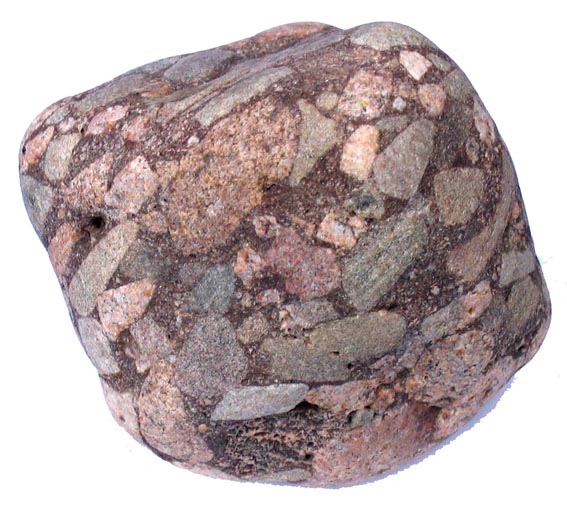
We should discard this term "Westernize". In the long run, the West isn't going to change the Dharma; the Dharma is going to change the West...but don't hold your breath, it may take a while. And when it does happen the term most apt will be the "conglameratization" of Buddhism in the West. Many little multi-colored pieces of stubborn rock in a sweet matrix of Dharma...but then what would Angry Asian and Progressive Buddhists talk about.

Don't think that I am trying to be critical of either Arun or Kyle. I love the shit they throw, and their insights as well as the dust they kick up. But every once in a while we really got to chill out a bit...maybe have a beer, eat some peanuts, then drink some more beer

That being said, I am looking forward to the posts

Cheers,

Tuesday, August 25, 2009

Transcendent Buddha, mundane Buddha and Western Buddhism


Brooke Schedneck over at Wandering Dhamma previously posting a very insightful and even-handed account of some contemporary issues in Western Buddhism. I specifically enjoyed this post since the trends illustrated were done so without a specific reference towards an "us vs. them" attitude that tends to arise with some of these issues.

I included a quick list below but I would recommend reading Brooke's full post for the summaries of each of these topics as well as the comments that followed. It definitely serves to remove some the illusion of Western Buddhism as being static and presents the view that it is indeed a growing, evolving entity that is stretching its arms into new realms.
  1. New Age vs. Hard Core Dhamma
  2. Mindfulness Meditation and the Secularization of Meditation
  3. Is Buddhism a religion? (Buddhism and religious identity)
  4. The dialogue of Buddhism and science/psychology
  5. Buddhism and youth
  6. Buddhism and pop-culture
  7. Buddhism and happiness
  8. Modern-day commentaries of traditional Buddhist teachings
  9. Prison Dharma
  10. Racially Diverse Buddhism
A large and looming figure over most of these current trends is actually the Buddha himself - or at least our perception of the Buddha and his life. Most modern or "Western" Buddhists tend to view the Buddha as a mundane, human figure with fantastic insights while others consider the Buddha himself to be transcendent and purposeful in his enlightenment even before his birth (in past lives and reincarnations) and actually dwelling in heaven before rebirth on earth for his final run.

Both of these views are seemingly present in the suttas (I say seemingly to mean according to my reading and understanding of the Pali Canon) as well as the image of the Buddha as transcendent in places and obviously human in others. So which is it? Transcendent. Mundane. Both. Neither. Bhikkhu Bodhi states that...

The Nikayas offer two perspectives on the Buddha as a person and to do justice to the texts it is important to hold these two perspectives in balance, without letting one cancel out the other. A correct view of the Buddha can only arise from the merging of these two perspectives, just as a correct view of an object can arise only when the perspectives presented by our two eyes are merged in the brain into a single image.


So utilizing solely the view as Buddha as mundane would be a poor demonstration of the Buddha as an overall well-rounded figure. As well as viewing the Buddha as wholly transcendent and supra-mundane would be equally deprecating to the figure of the Buddha. Both views are needed to see the figure of the Buddha completely.

The same is true of Western Buddhism and the issues listed by Brooke. It is time to view these issues, and any new ones to arise in the future, evenly and balanced rather than in opposition and in contrast to each other. Rather than saying that Western Buddhism should be secular or traditional or whether or not modern commentaries are derogatory to the Dharma or not, we should be viewing these new trends as a part of an emerging culture in the West and examine why they are occurring and how it is making Western Buddhism more robust and full in the long run.

Just as with the Buddha, viewing the Dharma through tunnel-vision negatively affects our overall understanding of it.

Cheers,

Thursday, August 20, 2009

Drinking the Buddhist Kool-Aid


Recently, two different turns of phrase (both rather morbid and strange) have popped up at work that got me thinking. Both in relation to individuals buying into a role/situation or accepting the whole dogmatic/doctrinal experience of a thing. The first is "drinking the Kool-Aid" and the second was "getting the implant". Suddenly I realized that the West has not truly drank the Buddhist Kool-Aid yet. As a culture we have sipped it and certain individuals have gulped it down but it is still a contention as to whether we want to take that jump.

I have been sipping it for almost 10 years now. Many Americans are cautious about swallowing a whole new dogmatic framework when many of us have rejected the one that we were born into. Throwing away a framework that we saw as inadequate and simply replacing it with new, different one doesn't solve the problem - a new one needs to be built. It does not simply appear - a skyscraper is created over months of hard work and consideration. We notice the sudden change with the demolition of the older building/framework but the gradual creation of the building itself settles into the background.

Suddenly, a skyscraper appears, full and complete, in the cityscape and we don't really recall the steps that were required for it to be there. That is how Buddhism is being created in the West. Right now we are still staring at this foundation and not sure what to make of it. We recall the hideous buildings that was there previously and desperately hope that the new one is better, more adaptable...but we aren't gulping down that Kool-Aid just yet but we have added some vodka.

Bricks are being placed on top of that foundation...some from traditional, ethnic and secular sources. While some of those bricks will last and others will not, we should withhold judgment until the whole thing gets erected and we get to stand back and see what was created.

The first hundred years are the hardest - Japanese monk visiting Rochester Zen Center on the movement of Buddhism into the West.

Cheers,