Monday, August 31, 2009

The evolution of Buddhism - It's not what you think.


Inspired by a cross-post at Progressive Buddhism and The Reformed Buddhist as well as a post by DjBuddha on the terminology of Buddhism movements in the West.
When we see people cling to sutra's or rituals or any one aspect of the religion, and are unwilling or unable to accept different ways of learning and teaching, I think we run the danger of making Buddhism a static practice, one that can't or won't progress to new and more innovative forms. While the ancient teachers have a great deal to teach us that should be carried forward, we mustn't forget those who are new to Buddhism, whose knowledge and understanding of the road signs we are pointing to aren't as robust as what a long time practitioner would have. It is important that Buddhism makes room for new ways of expressing the dharma and for inventive ways of exploring the true nature of self and suffering.

Well we all "cling" to our rituals and sutras as well as to aspects of our practice such as meditation or nembutsu. All is at the same level without one exceeding another. A good analogy is the misunderstanding of when people talk about evolution and expect it to infer a progression to a "better" or "perfect" state from a "bad" or primitive one. Instead, view it as random change determined by the culture-base that the Dharma enters into. When the Dharma is introduced to a secular nation it will express itself in a manner different, but not necessarily better than, when exposed to a culture (such as Japan) with a long-history of ancestor worship. Different, yes! But with no determination of one being better than the other.

Static is another loaded term. While static is inferred to be negative. In reality, no changes were made or at least only subtle changes were made, because of its innate adaptability. Static and traditional are not negative only descriptive. The same is true of the terms "modern" or "progressive". These infer movement only and not whether or not one is Good and the other Bad. Only that one has moved and the other hasn't.


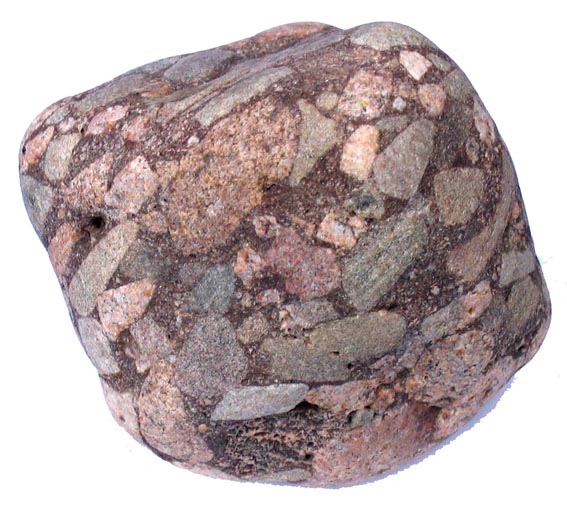
It isn't a straight path with polar opposites on each side in an obvious progression from a "bad" ancestrial stock to a "good" modern stock as the picture above demonstrates. And this is how many Buddhists in the West view each other or at least think that we view each other. A steady march from the static, archaic, ritualistic Buddhism of the past to a new stream-lined Buddhism of the future. This is not what is actually happening.


Instead it is a big bushy mess of movement with different schools and sects moving into new environments with new people (different races, socio-economic groups, backgrounds) forming new traditions and retaining older ones.


I can't emphasize enough that when I say traditional and modern, I do not infer that one is better than the other or that one is superceding the other in any fashion. With the radiation of Buddhism into the West we can expect to find many new and emerging "species" of Buddhism. Some new and flashy ones may shine briefly and then die out (Ohhh. I could name a few but I won't). Other more archaic forms (not a negative term only a descriptive one) will thrive, maybe more than they thrived in the past.


I still feel that I practice "Horsecrab" Buddhism. Old in form and definately Archiac in nature but if you live on the East Coast those son-a-bitches thrive. Compare that to some species that last only a few million years. But not everyone like horseshoe crabs some people like those fancy new fangled blue crabs. Whatever. To each their own.


Hope this wasn't too clunky an analogy. Feel free to comment.


Cheers,

[Before anyone else writes something that I have to remove. Here is my point: Buddhism is NOT linear rather it moves in many directions; Traditional or static is NOT bad, just a description; progressive is NOT good, just a description of change; I DO NOT prefer horseshoe crabs to blue crabs because one is tastier than the other but rather I can respect that fact that sometimes you don't need to change in order to adapt.]

Saturday, August 29, 2009

The Origin of Conflict


From Anguttara Nikaya 2


The brahmin Aramadanda approached the Venerable Mahakaccana, exchanged friendly greetings with him, and asked him: "Why is it, Master Kaccana, that khattiyas fight with khattiyas, brahmins with brahmins, and householders with householders?"

It is, brahmin, because of attachment to worldly pleasures, adherence to worldly pleasures, fixation to worldly pleasures, obsession with worldly pleasures, holding firmly to worldly pleasures that khattiyas fight with kattiyas, brahmins with brahmins and householders with householders.

"Why is it that, Master Kaccana, that ascetics fight with ascetics?"

"It is, brahmins, because of attachment to views, adherence to views , fixation on views, addiction to views, obsession with views, holding firmly to views that ascetics fight with ascetics."


I thought this was an interesting passage from the Anguttara Nikaya to keep in mind. Especially in relation to past, recent and future contentions that are bound to arise as Buddhism continues to grow in the West. I think that some individuals (in general) and Buddhists (specifically) spend much of their time focusing on is the renunciation of attachment to worldly objects and pleasures while simultaneously fostering attachments to their own specific views. It matters very little if these views are political, personal, religious or philosophical. When we no longer attempt to view the world through the eyes of others and strictly rely on the tunnel-vision of our own experience, we quietly and subtly walk off of the path...


...but I am not attached to that view. Just something to keep in mind. It seems that even the Buddha admits that you can be in the stream and still be somewhat of an ass. There is hope for me yet.


Cheers,


Friday, August 28, 2009

What Buddhists Do


From What Buddhists Believe by the Venerable Dhammananda:


On one occasion a Christian delegation visited Ven Dhammananda to have a dialogue. A member of the delegation saw the book on his desk and asked, “Venerable, What do Buddhists believe?” He replied, “Buddhists do not believe anything!” Puzzled, the man asked, “ Then why did you write this book?” Ven Dhammananda smiled and said, “Well, read the book and see for yourself whether there is anything in Buddhism simply to believe.” The man then asked “Alright then, what do Buddhists do?” Ven Dhammananda replied, “Well, first they study, then they practice and finally they experience” (pariyatti, patipatti, pativedha).


I like the fact that Ven. Dhammananda melds together the "Believe" with the "Do". That belief is inherit with the action - with the physical and mental striving towards the goal of enlightenment rather than apart from it.

This book was written from a Theravadan perspective so I am not surprised that the study of the sutras comes first [first they study, then they practice and finally they experience” (pariyatti, patipatti, pativedha)]. Personally, I think you need to practice first to garner and nurture your own wisdom and insight. Then I believe you can really appreciate the Sutras, otherwise they are just words. Even the Buddha did not appreciate the Dharma until he gathered some wisdom around himself through the guidance of the religious teachers of the time. If he did not study with Alara Kalama, Udaka the son of Rama and wandered five other ascetics he never would have gained the insight to make his own realization of the Dharma. Those early steps are necessary ones.

But that is just my opinion. Another thing that I think isn't inherit in the statement by Dhammapada is that the journey for some Buddhists is just as palatable and important as the goal itself. Most Buddhists that I know rarely think about the end result of the practice and the striving and the effort rather they focus on applying that effort to the present moment. I rarely focus on the end-result of all this because I don't really know what it is or what it should be. And without that expectation my practice is much stronger.

It reminds me of sitting for the first time for an extended period. You work past the pain and fatigue and amazingly it isn't the body that grunts and creaks the most, but actually the mind. Damn, it fidgits and fights but you strive on. It feel that focusing on the end result would not have gotten me through it but focusing on the present does.

Now the mind doesn't fight so much...but you know I sorta miss that battle.


Cheers,

Wednesday, August 26, 2009

The Reformation of ... Buddhism?


You have to admire the balls that some people have - the sheer size of their karmic cajones. Kyle has started a new blog, The Buddhist Reformation, that will address some of the changes that Buddhist movements are making in the West as well as some of the waves. However, it seems that the tone of the blog is that Buddhism is already an established part of Western society, which it isn't. You can't really reform something that isn't even established yet. Now this was a reformation.


I have always enjoyed the image of a turning Dharma Wheel and of someone turning that Wheel. Even the Buddha has a great respect for the Dharma because he didn't create it - he found it. He discovered it. IT already existed. Sometimes that Wheel turns fast and sometimes slow. But one thing is certain - many hands turn it and only a few are "Western".

The Dharma hasn't been established in the West yet. Just a few daring individuals from other cultures that wished to create something new in someplace unexplored. Explorers in a new realm. But even before there is an opportunity to establish something in the West - before it has even begun - we are already creating camps, erecting walls and insisting that we are being repressed.


Western Convert Buddhists insist that they are not taken seriously by other culture-based traditions and those Culture-Based Buddhists (I have no better term) insist that they are not well-represented in the mainstream media. In my opinion, both standpoints are silly.


Most of all, there are more than some that believe the West can't create its own tradition. They feel that the West is somehow evil and wrong, that the culture is ugly and shameful. And this is the kind of radical politics that are driving away countless people that are in desperate want and need from relief from suffering.


I don't recall in recent history even seeing the Dharma move into a new culture. We look at Indian, Chinese and Japanese history and see schools at odds with each other. Schools that already have a long history and establishment. New schools arise (Jodo Shin Shu and Nichiren for example in Japan) and the government and religious establishment is immediately worried that their control over the spiritual growth of their parisisioners will be in jepordy. Thus laws and restrictions are passed and people/groups/sanghas are prosecuted. Those reformist groups then continue their practice and voice. That is a reformation.

In the West it is no more than toddling youngsters crying because a favorite toy is being grabbed by another toddler.

This Westernization is only the next manifestation of the dharma; it is not meant to tear down other cultures, but build up a new one. Just as countless other cultures have created their own tradition of Buddhism, so can the West.

We should discard this term "Westernize". In the long run, the West isn't going to change the Dharma; the Dharma is going to change the West...but don't hold your breath, it may take a while. And when it does happen the term most apt will be the "conglameratization" of Buddhism in the West. Many little multi-colored pieces of stubborn rock in a sweet matrix of Dharma...but then what would Angry Asian and Progressive Buddhists talk about.

Don't think that I am trying to be critical of either Arun or Kyle. I love the shit they throw, and their insights as well as the dust they kick up. But every once in a while we really got to chill out a bit...maybe have a beer, eat some peanuts, then drink some more beer

That being said, I am looking forward to the posts

Cheers,

Tuesday, August 25, 2009

Transcendent Buddha, mundane Buddha and Western Buddhism


Brooke Schedneck over at Wandering Dhamma previously posting a very insightful and even-handed account of some contemporary issues in Western Buddhism. I specifically enjoyed this post since the trends illustrated were done so without a specific reference towards an "us vs. them" attitude that tends to arise with some of these issues.

I included a quick list below but I would recommend reading Brooke's full post for the summaries of each of these topics as well as the comments that followed. It definitely serves to remove some the illusion of Western Buddhism as being static and presents the view that it is indeed a growing, evolving entity that is stretching its arms into new realms.
  1. New Age vs. Hard Core Dhamma
  2. Mindfulness Meditation and the Secularization of Meditation
  3. Is Buddhism a religion? (Buddhism and religious identity)
  4. The dialogue of Buddhism and science/psychology
  5. Buddhism and youth
  6. Buddhism and pop-culture
  7. Buddhism and happiness
  8. Modern-day commentaries of traditional Buddhist teachings
  9. Prison Dharma
  10. Racially Diverse Buddhism
A large and looming figure over most of these current trends is actually the Buddha himself - or at least our perception of the Buddha and his life. Most modern or "Western" Buddhists tend to view the Buddha as a mundane, human figure with fantastic insights while others consider the Buddha himself to be transcendent and purposeful in his enlightenment even before his birth (in past lives and reincarnations) and actually dwelling in heaven before rebirth on earth for his final run.

Both of these views are seemingly present in the suttas (I say seemingly to mean according to my reading and understanding of the Pali Canon) as well as the image of the Buddha as transcendent in places and obviously human in others. So which is it? Transcendent. Mundane. Both. Neither. Bhikkhu Bodhi states that...

The Nikayas offer two perspectives on the Buddha as a person and to do justice to the texts it is important to hold these two perspectives in balance, without letting one cancel out the other. A correct view of the Buddha can only arise from the merging of these two perspectives, just as a correct view of an object can arise only when the perspectives presented by our two eyes are merged in the brain into a single image.


So utilizing solely the view as Buddha as mundane would be a poor demonstration of the Buddha as an overall well-rounded figure. As well as viewing the Buddha as wholly transcendent and supra-mundane would be equally deprecating to the figure of the Buddha. Both views are needed to see the figure of the Buddha completely.

The same is true of Western Buddhism and the issues listed by Brooke. It is time to view these issues, and any new ones to arise in the future, evenly and balanced rather than in opposition and in contrast to each other. Rather than saying that Western Buddhism should be secular or traditional or whether or not modern commentaries are derogatory to the Dharma or not, we should be viewing these new trends as a part of an emerging culture in the West and examine why they are occurring and how it is making Western Buddhism more robust and full in the long run.

Just as with the Buddha, viewing the Dharma through tunnel-vision negatively affects our overall understanding of it.

Cheers,

Thursday, August 20, 2009

Drinking the Buddhist Kool-Aid


Recently, two different turns of phrase (both rather morbid and strange) have popped up at work that got me thinking. Both in relation to individuals buying into a role/situation or accepting the whole dogmatic/doctrinal experience of a thing. The first is "drinking the Kool-Aid" and the second was "getting the implant". Suddenly I realized that the West has not truly drank the Buddhist Kool-Aid yet. As a culture we have sipped it and certain individuals have gulped it down but it is still a contention as to whether we want to take that jump.

I have been sipping it for almost 10 years now. Many Americans are cautious about swallowing a whole new dogmatic framework when many of us have rejected the one that we were born into. Throwing away a framework that we saw as inadequate and simply replacing it with new, different one doesn't solve the problem - a new one needs to be built. It does not simply appear - a skyscraper is created over months of hard work and consideration. We notice the sudden change with the demolition of the older building/framework but the gradual creation of the building itself settles into the background.

Suddenly, a skyscraper appears, full and complete, in the cityscape and we don't really recall the steps that were required for it to be there. That is how Buddhism is being created in the West. Right now we are still staring at this foundation and not sure what to make of it. We recall the hideous buildings that was there previously and desperately hope that the new one is better, more adaptable...but we aren't gulping down that Kool-Aid just yet but we have added some vodka.

Bricks are being placed on top of that foundation...some from traditional, ethnic and secular sources. While some of those bricks will last and others will not, we should withhold judgment until the whole thing gets erected and we get to stand back and see what was created.

The first hundred years are the hardest - Japanese monk visiting Rochester Zen Center on the movement of Buddhism into the West.

Cheers,

Wednesday, August 19, 2009

Athiests Love Buddhism!

If you have not read the post on One-City on the secularization of Buddhism - I highly recommend that you do. While lengthy, it does bring up some great points and controversies in a positive manner. However....


Despite comments otherwise, we have already witnessed the secularization of Buddhism, it happen as soon as it hit our shores and I am so glad it did. Once Buddhism became more popular in the West, the huge doctrinal push was towards zazen and meditative practices...practices that were not ordinarily undertaken by lay-practitioners of Buddhism in the East - Buddhism needed a new cultural base. The best description I heard of this new movement was from a practicing friend who commented that he wished to be something more than a layperson and not exactly a monk. He wanted the discipline but not the asceticism - the Buddhism but not the Bullshit. (so the language may be insulting but I do not mean to infer that non-western Buddhism is Bullshit - far from it - It serves its purpose in the political climate and culture that it is exposed to. I expect the same to happen here, Buddhism will flow into whatever societal need that is available - funerary, meditative, social or doctrinal).

So the secular West attached itself to Buddhism - specifically Buddhist practice and philosophy but left Buddhist ritual and rites on the sidelines. The drive was towards an individualistic and non-hierarchical system because that is what people needed it to be. I don't think this was done for a distaste of the more esoteric and religious aspects of Buddhism (personally, I enjoy much of the esoteric as well as the transcendental aspects of my practice), but rather because that role was already taken by other religions in the West. Buddhism was providing something different. I think what it was providing was some amount of control. That control is all about the choice.

Rather than being viewed as a "stripping down" of Buddhist teachings, I prefer to see it as a broadening of Buddhist practice. We are not culturally designated a specific school, sect or vehicle and it is thus much easier for us to meld different traditions together into a cohesive whole-practice. One that fits into our lives and our needs. Control.

But while this freedom is invigorating, the simple fact is that we are practicing without a real framework (its the double-edged sword of Independence). The type of framework that develops over hundreds of years of practice and infrastructure is the type we are lacking. And while I tend to be wary of those frameworks and what they can (but not necessarily do) represent (close-mindedness, tunnel-vision and group-think) I do appreciate that it does provide a certain amount of spiritual guidance and social structure and, frankly, awesome Buddhist BBQ.

For the poor small-town or Midwestern Buddhist, we have none of that. We rely on what small community we can find or create and then endeavour to teach ourselves what amounts to be a convoluted, lengthy and difficult religious philosophy (the entire Pali Canon that is translated into English takes up at least 5 feet of shelf space). A secular, cohesive approach makes that much easier for the lay-person to get started in practice or to at least understand the basics is important - no matter what the label is.

From the words of Soen Roshi:

To get this chance to practice the dharma is very difficult. To be here as a human being is very difficult. Among uncountable sperm and egg...you are here. Wonderful chance. Congratulations.

Yes, congrats! Cheers! We all practice Dharma. Maybe from a DVD or maybe from a zendo hall. Maybe in Sanscrit and Pali or secular terms. Maybe simplified or maybe complex....we only stop our practice when we sit back and judge others and tell them...

...you are doing it wrong.

So strive on with your analytical meditation or with your Sutta Nipala, with your Hardcore Zen or your Big Mind. I honestly don't care but I hope that it works for you and you are a happier person for it...and if it doesn't work then go tantric or yogacara or zen or tibetan or maybe secular or forest style or Shin or Nichiren or just sit with a bunch of hippies in your hometown or a bunch of conservatives in your law office or do like me and sit with your child and enjoy every minute of it because, brother, if we learn one thing...its that it don't last for more than a moment - this wonderful chance - and then is gone.


Cheers,

Tuesday, August 18, 2009

Householder Zen - Soen Roshi


From "One Bird One Stone"


"Cooking, eating, sleeping, every deed of everyday life is nothing else than this Great Matter. Realize this! So we extend tender care with a worshipping heart even to such beings as beasts and birds - but not only to beasts, not only to birds, but to insects too, okay? Even to grass, to one blade of grass, even to dust one speck of dust. Sometimes I bow to dust...."


Sometimes so do I. Thanks Roshi. Goodnight.


Cosmic Dust

Monday, August 17, 2009

Buddhist Fundamentals or Buddhist Fundamentalists

Inspired by and in response to the recent post at Progressive Buddhism. Kyle went out on a limb to bring some new topics into the arena and we should thank him for it...and then yell at him. :D

As we've seen recently, Buddhism is making inroads with some members of the Christian community, making for some very publicized, very heated debates. As Buddhism starts to spread into the more conservative areas of the West, the community is beginning to run head long into types of people who are pretty different from the Western Buddhists we are all used to.


I live in a very conservative area of the Great Plains (I am out here in ranch country) and I can't say that I share this pessimistic view of Buddhist practice in the red states. For the most part there has been no conflict between political ideologies nor even a "run-in" with religious or spiritual ideologies. Actual most of the community is accepting of diverse views (for the most part, obviously there are still issues with atheists, homosexuals and people who where white after Labor Day).

Half of my practicing sangha are practicing Christians (although I am unsure of the exact denomination) and the other half are converted Buddhists. Some of us are expatriated "East-Coasters" and others are lifelong South Dakotans. In the long run there has been very little conflict over differing political beliefs and outlooks or lifestyles. That is not to say that we have many "conservatives" in our sangha (I don't usually ask) but we do have many differing viewpoints. That is the beauty of a small sangha - we know everyone and there is very little anonymity - so if you want to make start making grandiose political statement (leftist or far right) you have to be prepared for some possible disagreement.

Are we ready for not only non-vegetarians, but those who perhaps hunt and fish for food? Are we ready for those who own guns, maybe are members of the NRA and are not pacifists? Are we ready for those who take pride in their rural roots, like country music and talk with a drawl? Are we ready for those who claim themselves to be *gasp* Republicans or conservatives?

I would say "Yes" to every one of those questions (I realize that they are somewhat facetious in nature) and add that there has always been a contingent of Buddhists with conservative beliefs participating in sanghas. It isn't the fact that Buddhism is moving into the interior of the country that has caused this diversity. Rather it is the movement of more people towards varying spiritual and religious "paths", whatever the geographic region. At one point it was explained that only one Path is the correct Path, then many Paths towards the same goal. I think now people are realizing that these Paths not only have the same goal but also intersect and wind around each other.

To not accept a person on a Path because it is paved rather than lined with crushed oyster shells is a poor spiritual outlook - no matter what your beliefs or denomination.

The important question will be, will tolerance of each others views prevail, or will we all just continue to splinter and factionalize based on things that have little to do with the basic teachings of the Buddha? We all suffer, liberals and conservatives alike, and I think it would be exceedingly disappointing if something as transitory as politics deprived anyone of finding some shelter from the storm of Samsara. The doors of Buddhism should never have a lock upon them.

I agree that Buddhism should be inclusive rather than exclusive. However, the important question in front of us is how we as Buddhists accept, not differing political stances, but differing religious viewpoints.

Recent events concerning Christians with an interest in Buddhism teachings has caused some concern in the Christian community whether or not parishioners or voters will accept a Bishop or Legislator who follows a Buddhist path as well.

This concern is being mirrored by some in the Buddhists community as well, in a seemingly up-swell of Fundamentalism in the Western Convert Buddhist community lately. Read the comments concerning the state of traditional Buddhist practices being accepted by Christian Churches or a Zen practitioner's and Minister's attempt at higher church office. A large percentage of the arguments are between Fundamentalists of both sides. The Buddhist Fundamentalists are just as frothy-mouthed and ridiculous as the Christian ones. Neither side is willing to listen to or accept the other side's viewpoint. This was view was summed up nicely on Twitter…


Christian missionaries were not successful in destroying Buddhism 200 y ago, but it's happening now here in Christian land.


Some Christians are accepting and incorporating Buddhist teaching and views into their own religious practice and we consider this something that is “destroying” Buddhism? Buddhists walking around thumping sutras, pushing philosophy and slinging quotes in reaction to practicing Buddhists is poor form – pure and simple. I started calling myself a Buddhist while still a church-going Christian. It took me 5 years of practice and reading to get to the point where I was able to move off of the paved path of Christianity and onto the crushed oyster shell path of Buddhism.


We shouldn’t be judging those that are just playing around with new paths. Rely not on the teacher/person, but on the teaching. Rely not on the words of the teaching, but on the spirit of the words. Rely not on theory, but on experience.Do not believe in anything simply because you have heard it. Do not believe in traditions because they have been handed down for many generations. Do not believe anything because it is spoken and rumored by many. Do not believe in anything because it is written in your religious books. Do not believe in anything merely on the authority of your teachers and elders. But after observation and analysis, when you find that anything agrees with reason and is conducive to the good and the benefit of one and all, then accept it and live up to it. - the Buddha
It seems that most of those experimenting path-goers are doing just as the Buddha suggested. Why don't we let them make their own decisions and choices without insisting that they practice "true" Buddhism.

Smart guy that Buddha and a snazzy dresser to boot...he absolutely killed in the '70s.


Saturday, August 15, 2009

Buddhist Wedding Reading

I have been asked to do a Bible reading for my sister's wedding. Which, of course, I am honored and willing to do even though not a Christian. I would read from the Book of Satan if she asked me to do so or from Bill O'Reilly's autobiography (I know, I know...splitting hairs).

But I would like to do a Buddhist reading for the reception (with a beer in one hand and well...a beer in the other as well probably). So if anyone has any suggestions for something from the wide, wide Buddhist canon, I would appreciate it.

Short and sweet would be prefered...refer back to the beer in the hand comment above.

Cheers,

Burma and the Buddhist Saffron Revolution

Posted over at Progressive Buddhism:

The time for non-violent, peaceful civil disobedience is quickly coming to an end, and in my opinion the truly compassionate route for the populace of Burma to take, including the monks, is to take off their robes, pick up a rifle and decapitate the despotic, tyrannical and repressive leadership of the current Burmese regime. The good people of Burma have been abandoned by the rest of the world and therefore should join the remnants of the rebel guerrillas and other repressed minorities such as the Karen, Karenni, Shan, Tavoyan, and Mon, and take the most unpleasant route of armed confrontation. The Burmese people can not afford another Cyclone Nargina, they can not afford 40 more years of quietly waiting while their young girls continue to get sold into the human sex slave trade and their small children are forced into hard labor. They can not afford 40 more years of hunger and disease, of poverty and repression, 40 more years of wasting away into a black hole of endless suffering. No longer does the path in Burma lay in peace and civility; the way to end this suffering, unfortunately, lies in the gun.


It seems to me, and I admit a large amount of ignorance on this topic, that the people of Burma are hitting a critical point. However, it is very easy for us to state that the Burmese people should just rise up. We sit in comfortable chairs and have disposable time and income. They have lived their entire lives in subjugation. An entire generation under the boot. We don't know how that feels.

I can't say that I agree with the sentiment expressed by Kyle but I can say that I respect his opinion and appreciate the time he took to present relevant information on situation in Burma. Rev. Danny Fisher also instituted a call to action with the recitation of the Metta Sutta and I look forward for Arun to post his insights and opinions on Dharma Folk.

For more info on Burma and the Saffron Revolution check out The Buddhist Channel. If you have any other resources on this please post them in the comments.

Friday, August 14, 2009

The Blood Pool Hell Sutra


Generally, Zen priests and monks are not seen as mediators and benefactors of the afterlife for their practitioners. However, in medieval to early modern Japan, priests took exactly this role; mostly in the role of funerary practices that guaranteed movement of the deceased into a Buddha Land or traditional heaven through priestly intervention over a period of up to 33 years after the deceased's passing.


More interesting though is the placement of women in Japanese Zen as being intrinsically tainted and inevitably fall into the pits of the Blood Pool Hell. The torments of which was described by a young girl possessed Buddhist nun in 1730:


"Six times a day we come out of the pool to drink blood. If we refuse...frightening demons come and torture us with metal rods before being thrown back into the blood pool. In the blood pool, countless insect like creatures with metal snouts come to pierce our skin and worm into our flesh to suck our blood." [From Duncan Williams' "The Other Side of Zen"]

The Ketsubonkyø, or the Blood-bowl Sutra, is a sutra composed in China around the end of the 12th century or the beginning of the 13th.4 It describes how Mokuren(Mu-lien, Maudgalyåyana), disciple of the Buddha famous for his supernatural or magical powers, descended to hell to save his mother. This narrative differs from the classic Mokuren story, as told in the Yü-lan p’en ching (Urabonkyø), which we explored in Chapter Three. In that story as it appears in the Buddhist cannon, Mokuren saves his mother from the realm of hungry ghosts. Here, however, we find her sunk in hell submerged in an enormous pond, or lake, of menstrual and birth blood. She is in the company of a multitude of women there who suffer abuse at the hands of the hell wardens and are forced to drink the blood. They are punished like this, the sutra explains, because the blood produced by their bodies spills on the ground and offends the earth gods, or ends up in rivers from which the water to make tea for holy men is drawn. This hell, called chi no ike jigoku (blood pool hell) in Japanese, threatens damnation for the sin of female biology. (It is worth noting that late medieval Japanese visual representations illustrate another hell for women who are unable to bearchildren, the umazume jigoku). [from Childbirth, Violence and the Mother's Body by Hank Glassman]

It was later explained that only the recitation of the Ketsubonkyo (Blood Pool Hell Sutra) by Zen priests or use of talismans sold by the temple would save and free women from this hell. The priest was then visited in a dream by Jizo who told him of the location of the sutra in a marsh behind the monastery.


Women, according to tradition, inevitably fell into this hell due to the evil karma accrued from the dispensing of menstrual blood and blood from childbirth that seeps into the ground and then spoils deities sacred to the native Shinto religion as well as Buddhists deities and monks. Offerings made from water which has been stained by blood (even from soiled clothes that were washed in rivers) in turn, rather than placate the Deity or Buddha, would instead anger them.


The promotion of the idea of women being intrinsically polluted and thus absolutely unable to avoid the Blood Pool Hell was promoted primarily by the Soto Zen sect as well as that pollution to be passed onto the activities and purposes of men. The failure of the construction of a temple or a specific artifact could be blamed upon the pollution of women within proximity to the site.


Many are attracted to Buddhism because of a sense of egalitarianism and gender equality but with the Blood Pool Hell Sutra we have an example of a culture of mysogany being accepted, promoted and propagated by Zen priests.


Just something to keep in mind. Here is one of the several versions of the sutra:


Bussetsu Mokuren shokyo ketsubon kyo
[from "Menstration Sutra Belief in Japan" Takemi Momoka
Japanese Journal of Religious Studies 10/2-3 1983]

Once the Buddha took 1250 biksus into the middle of the Deer Park. At that time, the venerable Mokuren put the following question to the Buddha: Once I went to such-and-such a prefecture, and saw in the middle of a large field there a Hell composed of a pond of menstruation blood. This pond was some 84,000 jujana wide, and in the middle women who were wearing handcuffs and ankle chains were undergoing hardships. The demon who was the lord of this Hell came here three times a day and forced the women sinners to drink the polluted blood; if they refused to do so, he would beat them with an iron rod. Their screams of anguish could be heard from great distances away. The sight of this made me very sad, and so I asked the Lord of the Hell why the women were being forced to undergo such hardships. He replied that the blood the women had shed during the birth of their children had polluted the deity of the earth and that, furthermore, when they washed their polluted garments in the river, that water was gathered up by a number of virtuous men and woman and used to make tea to serve to holy men. Because of these acts of uncleanliness, the women were now forced to undergo sufferings.

Thus Mokuren used his holy powers to come to the seat of the Buddha and to inform him of what he had seen with his eyes. He asked, then, what he needed t o do for the women to be saved from their punishments in the pond of blood. The Buddha then answered, teaching Mokuren how t o save the women. He said it would be necessary for them to respect the three treasures of filial piety, to call on Mokuren, to hold a Blood Pool Liberation service, to hold a Blood Pool Feast, to read sutras, to have an esoteric ceremony, then to make a boat and float it off. At that time a five-colored lotus flower would appear in the middle of the Blood Pond. Then, he said, all of the women sinners would be saved, and reborn in the Buddha's land.

For the most part it seems that this particular belief and practice no longer occurs in Japan in any form but I would be curious if anyone knows if there are any remnants of this practice still alive.


Cheers,

Thursday, August 13, 2009

Compassionate Teaching of Zen with beer


Inspired from Knowledge and Practice – Zen Idea, Zen Praxis Part 2 as well as several conversations had over the past few days:

According to Zen, we should take great care in clarifying both the limitations and the potential of knowledge, as well as practice, and do our utmost to maintain a proper balance of both.


This always seems to be a conversation that starts up on between the scholarly and the experiential - a long held debate that comes in many forms. One promotes study and sutras and the other promotes the experience of Zen in daily life and meditation (or some combination). Both sides banter back and forth, slinging examples, quotes and insights at each other. An argument centered around the worth of either of these stances is, in the end, meaningless - all hot air and stiff breezes.


When we sit back and view, truly dissect and examine our practice and our Buddhist faith, whether it stems from a scholarly or an experiential background, the center of that practice is, in essence - compassion. Pure and simple. No more and no less. Yet this fact gets lost in dialogues of proper meditative practice and mindfulness excercises. We lose it in the commentaries of Zen figures long dead and gone, in ceremonies no longer significant to us. We sit and concern ourselves with posture or philosophy; books and sutras; chanting and bowing. But boil all of that away and what do we have....


...nothing if we forgot about compassion. Our study and our practice is an expression of our True Buddha-Nature; an expression of compassion. That is and always be the Buddhist drive. We can balance the sutra study and the meditation but if at the base of either there is no compassion then there is no Buddhism. There may be a quiet mind or a great understanding of philosophy and buddhist concepts but there is no Buddhism.


Knowledge itself is not a problem. It is in fact, essential to Zen. What is repudiated and denounced is the failure to put it to use.


Exactly. Knowledge (physical, mental or intuitive) is useless without the compassion that should accompany it. Without the understanding that individuals are suffering constantly in this world and we, as Buddhists, take it upon ourselves to aid in the alleviation of that suffering, we get lost and we go nowhere. We study and meditate in order to cease suffering - not to argue that our method is better than the guy's next door. We do all this to help others...period. Without that it is just mind-candy and dead languages; armchair philosophy and bedside reading.

So what happens after we spend all that time gaining knowledge and staring at a wall? Someone comes to learn from us and what do we do? We grab all that knowledge and force it upon the person. We toss quotes and terms and postures and chants. That is not teaching. That is throwing information and hoping that some will get lucky and stick. A good teacher needs to approach a student and determine his/her ability, intent and drive. Then from that assessment we teach to the individual and not at him. That is compassionate teaching and that is Zen.

With those thoughts in mind try to focus how you can practice from day to day without implicitly stating that another teaching is incorrect or unbalanced...and that sometimes "skillful means" requires oyster shooters and grotesque amounts of wheat beer.
Cheers,

Sunday, August 9, 2009

Failing Practice, Frail Practice: Examinations of Homeowner Zen


Inspired by a recent post on Progressive Buddhism , Digital Zendo as well as C4Chaos's #openpractice tag on Twitter I thought I would quickly review and examine my own practice in an open forum. Equally inspired by my thesis advisor, I will attempt to keep it less than 500 words.

I consider myself a Zen Buddhist. This preference stems more from the fact that it is one of the few sects I have direct experience in actual practice than a real solid attachment to the teachings.

With only a small Buddhist population in my area, I rely largely upon books, blogs and podcasts for my Dharma. Many are accessible and based upon the Pali Canon while others discern more personal expositions into the practice. While I appreciate both types and the guidance from either can be helpful, I find that my own practice is beginning to wane slightly.

I make an active attempt at practice every morning. I prepare for zazen with some yoga stretches and a quick workout (this old bag of bones is not as flexible as it once was) and then open my altar and sit for 15 minutes (I used to be able to devote more but with child and work at 8:00, I am limited in time). Then I chant the Maka Hannya Haramitta Shingyo repeat my vows and listen to a relevant podcast or engage in some working meditation (dishes always need washing and floors always need sweeping).

Practice with my sangha is where I have been particularly lax. I usually attend a Sunday 9:00 zazen and chanting service at the Laughing Teabowl Zendo (a grass-roots Zen group that meets in Rapid City). It is usually a small group of 8-12 that is organized by two lay-practitioners (both have jukai). We meet in a yoga studio and operate the service as is standard in a Soto Zen temple. We take turns in opening the altar, timing zazen and striking the kesu, announcing kinhin, striking the mokugyo and leading the chants. We are loosely affiliated with the Great Mountain Zen Center in Lafayette, Colorado and have two weekend sesshins a year attended by Gerry Shishin Wick Roshi and Ilia Shinko Perez Sensei. Both qualified teachers (although I have yet to attend a seshin) have developed The Great Heart Way (a secular approach to Buddhism – Nothing new here).

At one point my home-practice was a panacea for the changes I was expecting in my life: A new, more challenging job, a child on the way and changes in my academic study. However, while a sublime experience in the preparation for these changes; my Zen practice has become superficial as of late and not holding the same depth as it was previously. Did the practice help me in the preparation for changes but not in the execution and follow through of those same changes? Did this bag of wind blow too hard and I am now simply out of breathe and waiting to inhale again? Or for all of my big words on home-practice, is my own practice deficient and lacking and needs guidance?

510 words.

Cheers,


PS - Kyle much love for the inclusion of "Sweep the Dust, Push the Dirt" in your "My Twelve: Best Buddhist Blogs by Individual Practitioners". I feel that I am undeservedly in lofty company. All of the blogs you listed were from intelligent and insightful practitioners (my personal favorites being Jaye Seiho Morris and Mujaku) as well as some others that I was not familiar with but am very happy to now discover and annoy. Cheers for the inclusion on the list!


shit. that is now way over 500 words.

Buddhism finds home in some Churches

From the Denver Post: Buddhism stengthens ties to Church

What in the recent past seemed exotic and foreign is now almost routinely folded into "the fold." Buddhism is not only accepted as a mainstream American religion, it is a path increasingly trod by faithful Christians and Jews who infuse Eastern spiritual insights and practices such as meditation into their own religions.


I've stated before that most of my practicing sangha are primarily Christians who utilize Buddhism or meditation in addition to or as a supplement to their primary Christian faith. It is encouraging that at least some churches accept this as an important aspect of spirituality that is often found lacking in Christianity - the comptemplative.

The Pew Forum's Religious Landscape Survey in 2007 found that seven in 10 Americans who have a religion believe there is more than one path to salvation. A growing number of people are contemplating more than one each. And they are contemplating contemplation itself.


Yay! 7 out of 10 Americans are not close-minded idiots. I am impressed but doubtful with this number. Would all those differing paths be Christian, perhaps? Hmm?

There are Jubus — Jews who bring Buddhism into their practice of Judaism — and Bujus, who are Buddhists with Jewish parents. Then there are UUbus, or Unitarian Universalist Buddhists, and Ebus, or Episcopalian Buddhists. There are Zen Catholics.


Damn, do we need to label everything? "No, sir! I am not a Buddhist...I'm a Buju". Yeah, I'll being saying that out-loud anytime soon. Zen Catholic does have a fancy ring to it though.

"There is a definite trend and movement that will not be reversed," said Ruben Habito, a laicized Jesuit priest, Zen master and professor of world religions at Southern Methodist University in Dallas. "We are in a new spiritual age, an inter-religious age."

Judaism, Catholicism and Islam have rich traditions in contemplative practices, yet these had all but disappeared from everyday congregational life. For many Christians cut off from the past, or alienated from the faith of their upbringing, Buddhism has served as the bridge to ancient wisdom.

"We sensed that the Eastern religions, with their highly developed spirituality, had something we didn't have," Keating said. "In the last generation, 10 to 20 years, some didn't even think there was a Christian spirituality, just rules — do's and don'ts and dogma they didn't find spiritually nourishing. It's important to recover the mystical aspects of the gospel."


No problem there...rules suck and get in the way of everything. I like the blurring of the edges between spiritual and religious outlets. This is even occurring within Western Buddhism itself - practitioners are attempting to combine different vehicles together to better serve our own spiritual needs. Some complain that this is going against the "true" Buddhist teachings or blur the edges too much to the point that it is degrading the Dharma. For the most part historically different vehicles, sects and schools adapted teachings from each other and monasteries would often be filled with both Theravada and Mahayana monks. Evidently, some even included Christian monks and missionaries (if you really want the citation, I can look it up but seriously, its a freaking blog).

A great blog to check out this blog of a great melding of Christianity and Zen - Although granted it's Sweden...

Christian contemplative practices were lost or weakened in the Protestant Reformation and later in the Great Awakening — religious revolutions in colonial America that advanced the themes of Protestantism.
I am so psyched that I can just sit back and blame Kirby. Damn you Kirby, you f-ed up Christianity. I'm kidding Kirby, no need to comment here....ever.

The Buddha was non-dogmatic and non-authoritarian — a compassionate guide, not a god, Buddhist texts say. The Buddha was silent on the subjects of a supreme being and the immortality of the soul.

"Buddhism is more about spiritual practice than believing in certain doctrines," Habito said. "There are more definitive and particular requirements for saying 'I am a Christian.' " Yet the fusion of strong Buddhist elements with mainstream Christian religion has created a backlash, Simmer- Brown said.


*Heavy Sigh* - Well, no wrong. Buddhism does have dogma and sure as hell is authoritarian (currently reading about Togagawa Japan) but the preferred Western view tends to be that Buddhism lacks all those things that makes Christianity unpalatable to many.

In "The Three Pillars of Zen" Kapleau describes 5 levels of Zen Practice. This melding falls well within the second level "Gedo" Zen or "Outside Way" Zen where you incorporate Zen spiritual practice into another spiritual framework to further and enhance your spiritual path.

Overall, an encouraging article with a positive message.

Cheers,

Thursday, August 6, 2009

Is Western Buddhism Neutered? Part III - The Zen Fallacy


From William's "Toward a Social History of Zen"


Through the study of...prayer temples and parish temples, this book proposes a three part explanation for the growth of Soto Zen Sect...namely the ability of Soto Zen priest to attend to the needs of both the dead and the living while successfully negotiating government directives.


To arrive at this conclusion, Buddhism is treated, first and foremost, as a religion (a complex of institutions, doctrines and rituals) not a philosophy. "Lived religion" in contrast to a timeless philosophy, compels us to examine the interrelations among religious lives of actual persons...[through] popular literature, ritual manuals, villager's diaries, government records and stone markers...in a sense this prioritizes the study of Buddhists rather than Buddhism....it is the study of people's lives and the ideas that inform them.


So far, a great and interesting book. Some of comments brought up in its introduction do affect the way that I think most of us view Buddhism - Zen in particular and Western Zen even more so. We gather much of what we know from the Great Zen Masters as well as from the koan collections. We read sutras and meditate faithfully but with all of this we have succeeded in ungrounding our practice. Our practice comes from the lofty attributes of these great Master's deeds and thoughts but what is being, seemingly, proven is that this is not the base that Buddhism should sit upon...


Nor should it sit primarily upon the Buddha and his teachings. It is based on us and on how we (in the past as well as present) adapt those teachings to our daily lives.


However, the people at the center of this study are not exalted monks recorded in the annals of Zen History...Accounts of great Zen Masters and their doctrines have often been strung together and then published as a History of Zen _ an approach labeled as the "String of Pearls Fallacy". Without reference to non monastic traditions and popular practices, these studies masquerade as a full representation of Zen history.


This "string of pearls" fallacy extends far into Western and Modern Zen. We, for the most part, take the works of the "Masters" as our primary resource into the study and practice of Zen as well as Buddhism in general, and that is all. We mark the works of Dogen, Huineng as supremely inspired and important works of transcendence and then extend that to the current "Masters". We extol the Roshi and Zen Master ideal to the point that we are creating our own (from Shunryu Suzuki and Kapleau to Wilber and Shinzen Young). Nothing is wrong with the content of the teaching but the emphasis placed on them is unilateral and over-inflated. For the most part, Buddhism in Asian countries have moved past this idolization while here in the West, most sanghas (apart from a few, I suppose Engaged Buddhism begins to move toward this) do not actively engage the community. The modern history of Zen is being written through the words of a few elite individuals. Williams suggests that we...


examine the other side of Zen - the lives of ordinary clerics and lay-people - the "little people"...which challenges some of the traditional perspectives in the study of Buddhism...aiming to shift our attention from an exclusive focus on outstanding, exceptional religious individuals and their ideologies to the daily practices of the majority of ordinary Japanese Buddhists. I am not suggesting that doctrinal dimensions of religion, or its exemplary figures, are of not importance, but rather that we question our tendency to place them at the center of what constitutes the Buddhist tradition.


This is where, I think, Western Buddhism fails and fails horribly. We tend to disregard the cultural aspects of Buddhism - the Buddhism of the lay-person and the householder. Even the Western Buddhism that we consider to be "connected" to Buddhism's past (monastics, Lay-Ordained) only attach to the larger, obtuse doctrinal writings and philosophical expositions. That isn't culture. Well, it is culture but it is a very obscure and polished version of a very vibrant and human culture and it is what we are building the Western Tradition upon. Not upon the vibrant and human versions of Buddhist culture but the obscure and polished. This has lead to the creation of the archetypal "virtuously arrogant" American monk that sneers at poor state of Buddhism in other countries versus the "pure" version presented (or re-born) here. This has stemmed (at least I think so) from a disconnect between Western Zen and the standard "from the trenches" Zen practice and purpose.


...to suggest that they [the Zen Masters] or their doctrinal formulations are central to the Buddhist religion, or that the broader social contexts in which they existed is irrelevant, is to seriously misconstrue not only the Soto Zen tradition, but perhaps the Buddhist tradition in general...

Amen, brother.

Is Western Buddhism Neutered? Part II - Buddhism as non-religion religion


Recently posted by the Angry Asian Buddhist and I agree with the sarcasm. I tend to get annoyed at people when they say that my religion is not a religion. But I think that the reasons why people say this should be examined...


I’m 100% fine with people who insist that Buddhism isn’t a religion. But if they’re going to make that stand, then they should be fine with telling self-professed Buddhists that because Buddhism isn’t a religion then… Freedom of religion doesn’t apply to Buddhism. Buddhism doesn’t belong in interreligious dialogue. Monks and nuns should not be eligible for visas as religious workers. Buddhism doesn’t belong in religious studies. Persecuted Buddhists shouldn’t get religious amnesty.I’m probably preaching to the choir here. But in all honesty, if I find such a person who’s willing to do all that, I want to meet them. I want to bring my video camera too.


Hah! Funny the second time too! Seriously this whole religion/non-religion thing spreads around like a virus. With one camp insisting that the other camp is following (or not following) a religion (or non-religion). It starts to get silly. Hell, I used to consider a combination of Robitussin and Jim Henson's The Muppet Show as a religion and we're going to argue over this? Although, this distinction does some origin. I personally think this issue stems from some of the reasons that many individuals turn to Buddhism in the first place - reasons which turn out to be false. And what do you do when you discover that you were mistaken? Blame the people who may have had it right in the first place.


A deep dissatisfaction with the Judeo-Christian religion or an initial interest in agnosticism/atheism.


The lack of a creator god is a huge reason for the switch over to Buddhism from Christianity as well as the lack of an "official" holy text. Rather in Buddhism the emphasis is on a canon of works as well as supplemental works from other commentators and Masters. It then comes as a large surprise when practitioners learn that while no creator per se there are several celestial entities floating about dependant upon the specific school. The same thing applies to the Buddhist canon - it is far more than a vague roadmap to some Buddhist schools.

Buddhism is all about the individual and not about the group.

We would like it to be since we place so much emphasis in the West on individualism. Many of the aspects of the philosophy associated with Buddhism gives a sense of an amorphous, free floating belief system with rare intersections into society and politics. Of course this is utter bunk but it does seem to be how many new to Buddhism tend to view it.


Thus it comes as quite a shock when they learn that many organizations operating in the United States (Buddhism Churches of America) as well as those that have operated for a long time in Asia (the Soto school of Buddhism comes to mind). These have a well-defined hierarchy and priesthood. They perform the perfunctory role of religious educator, purveyor of services as well as arbitrator of rules and regulations - just as in any church the westerner may be familiar with.


Man, I can't even pop over to Twitter for a break without seeing this - "Buddhism is not an organized religion, it is an organized way of life without all the beliefs of a religion." or "Atheism is defined by not believing in deity. Buddhism is an atheistic religion (so are many others)." or "I have a hard time with religions. Buddhism comes the closest, only because to me it's not a "religion" so much as a philosophy."


While the above are true in a way. Buddhism is a way of life and does not believe in a divine creator it does have a massive amount of hierarchy and a defined cosmology. But to be fair, I do believe that Buddhism does take into account philosophy much more than other religions but it doesn't change the fact that it is,well, a religion.


So does this make Buddhism as a religion bad? No. Does it make Buddhism as a non-religion good? No. It just serves to highlight the difference in viewpoints - One a Westerner with no Buddhist experience just beginning to walk the path versus a person who grew up in a culture with an established Buddhist tradition. One views and desires a Buddhism free from all hierarchical entanglements and the other is more familiar with Buddhism functioning as a religion as well as a philosophical tool and cultural base. That religion is going to contain a cosmology, as well as spiritual realms and deities. It remains within us to determine which are useful for our own lives and which are not. If you wish to believe in a literal belief in the afterlife and deities then by all means do so. If you wish to view these as analogies and symbolism then you also have that right.

The problem lies when one insists that the other is a perverted or lessened form of the other.

Personally, I don't see too much in the way of one being better than the other. My own initial experience was with Buddhism in an academic or philosophical realm. Beliefs and the structures of those beliefs are presented in very academic and cold terms (read "faith free" or pragmatic). Like studying any philosophy, it is based largely on logic. A very "here is the outline and now apply to personal and daily life" sort of approach to it. Great, I learned some of the philosophical branch of Buddhism and next to nothing about why and how we practice and study. Nothing of the personal and communal aspect of Buddhism and certainly nothing of the history or culture of Buddhism - nothing of faith and belief (for the best definition of faith that I have seen in while, click the link). It was similar to learning a dead language. A very interesting topic but one that has long since passed from common usage and practice. ("No one actually believes that do they?")

So, yeah, I walked through that stage of it, myself, but was rather turned off by the view and moved to other studies and interests. Until, some time later, I turned back to the study of Buddhism with a more worldly and religious view. I began to view Buddhism it as more a pattern of belief and faith rather than by philosophical constructs and metaphysical discussions.


But I think the disconnect exists when people insist on what Buddhism is. I have gotten into the habit of stating it as a religion and the sneakily include in parenthesis (non-religion) because it really comes down to what Buddhism does for you. Many (myself included) view it as a religion with all the trappings that any religion brings into your life (including but not limited to - fundamentalism, differing sects, arguments, persecutions, entitlement and snobbery) rather than as a guiding philosophy with all the trappings that it brings into your life (including but not limited to - snobbery, entitlement, persecutions, arguments, differing sects and fundamentalism). Are you picking up on my point here? The difference is minimal and mainly rests in the person and how they express their beliefs (religious or not).


I began like many others and took the pragmatic aspects of Buddhism in an attempt to adapt them into my daily life in the hopes of making myself happier and my life more enriching. This included the reading of secular and philosophical books on Buddhism as well as a pragmatic, non-religion viewpoint on what I was practicing. But an amazing thing happened on my way to the stupa - I began to see the forest from the trees and I slowly began moving towards a faith based mode of worship. Different from my Christian upbringing and past but worship and faith-based nonetheless.

Many enter the river through different streams and nothing, nothing makes Buddhism less attractive as a religious practice then when others state that what they are doing is not Buddhism. Just because it is secular rather than religious, practical rather than faith-based does not mean that it is inferior.

And before the Modern Buddhists start snickering, I would like to mention that the reverse is true. Get off of your secular high-horse and realize that just because someone engages in Buddhist worship and religion, it does not make them any less rational or deserving of respect. To snicker and degrade those that are on the SAME PATH AS YOU because they choose to believe in some symbols that you do not believe in or in some aspect of magic, miracle or mantra makes you just as bad as those zealots that you dislike so much.

In the long run we all go back to the same place...the Buddha, the Dharma and the Sangha. The jewels are the same they just shine differently for different people. Get over it. Scott Mitchell stated it well in his review of the book "North America Buddhists in a Social Context"...[this is specifically the review of the chapter "The Emergence of a New Buddhism: Continuity and Change" by Coleman]


...On the contrary, he constantly compares these so-called "new Buddhists" to "Asian Buddhists," setting up the latter as a straw man to the positive and creative innovations of the former. According to Coleman, "new Buddhists" are embracing the positive effects of modernity whereas Asian Buddhists are "simply born into the faith" and have imported their "cultural baggage" to the West. Further, Coleman claims that "new Buddhism" bears a "striking likeness to the original 'Buddhism' of Siddhartha Gautama" (p. 186), since "new Buddhists" are largely converts as were the Buddha's original disciples. This is an unverifiable claim. As we have no direct access to the teaching of the Buddha, nor to the "conversion experience" of Ananda or Mahakasyapa or Maudgalyayana, how can we compare their Buddhism to that of disaffected white liberal Protestants from Northern California?


The point he brings up is that the conflict between "converts" and those with a cultural connection to Buddhism is a non-issue. By that I am not belittling the differences between to two groups, nor marginalizing their viewpoints. Instead I want to point out that it is a largely contrived difference. The main difference is how much the religion is attached to the culture. Converts may not have a cultural attachment to the religion while those that are born into it usually do. However, that difference is not only between the two groups as described but also exist within each group separately. Many born into the religion make Buddhism a part of their cultural identity and many do not. I was born into a Greek Orthodox family. The Greeks and Greek-Americans do not differentiate between their culture and their religion. The religion is an integral a part of their national identity and heritage as important as Souflaki and the Parthenon.


The point that I am attempting to make, and I hope it is clear, is that a statement against a group because of the culture that surrounds their belief system is a statement against that culture.

I am a converted Buddhist. I was originally Christian. I am now a Greek Buddhist. My Christian heritage is not baggage as would be inferred above but instead is an important part of my make-up and background. The same goes with someone from Thailand, Japan, Korea or Tibet. To say that one's culture is baggage is ignorant at best and at worst racist.

I really hope that we are not in the midst of developing a Fundamentalist group of Buddhists. Because nothing neuters religion (and Buddhism) more than exclusivity, dip-shits and douche-bags.


Cheers,

Wednesday, August 5, 2009

Householder Zen: Zen out of the Monastery


Sometimes lessons in practice can come in the strangest and most mundane places. Digging through my pile of books I came across a Zen cookbook that I never read but decided to flip through. I liked this passage...


How to Crack a Hard-boiled Egg

During one of Roshi's formal talks, we were given a lesson in the matter of cracking a hard-boiled egg Zen style. In his inimitable fashion, Roshi demonstrated how most of us had cracked the shell of our egg that morning at breakfast, and then showed us how a Rinzai Zen student should crack an egg. Not as we have done, with multiple taps on a table, but with one loud thump. Pierce the silence and be done with it.


Next morning what a difference, Crack. Pow. Bang. And then quiet. No tentative taps. A tap sufficient to crack an egg, constasting with the silence and somehow not disturbing it. Simple. Elegant. Brisk. Determined. The Rinzai approach to cracking an egg.


Rinzai students crack an egg in one swift movement. Much like their practice. The ego is shattered by following the teachings of the Buddha, zazen and koans study. No bull-shit and no mollycoddling. Unlike an egg though which can be cracked quickly with one hit but no preparation; we require time and practice to prepare ourselves for our eventual "cracking" and then the silence follows.


But it begs the question - How would a Soto Zen student crack an egg? I would expect that they would coddle, hug and nuture the egg until the shell just sloughs off.


Two schools with similar practice but different views on the shedding and casting off of the ego.


Cheers,


Monday, August 3, 2009

Buddhism and Hellenic Culture - Alexander the Bodhisattva

I recently picked up some material online about "Greco-Buddhism". So being of Greek ancestry as well as a practicing Buddhist, this would obviosly strike me as, well, awesome. I summarized some of what I found. If anyone knows of any primary sources that I could go to please let me know in the comments. An interesting thing that I found was that mostly the authors state that Hellenic culture may have had an effect on Buddhism rather than the reverse. This tends to make me believe that it is more of a Western scholarly pursuit rather than an Eastern one. In all likelihood the effects of this cultural mash-up would have effected both sides rather than one dominating.

Greco-Buddhism is the religious combination of the Hellenic culture of Classical Greece and Buddhism, which developed over a period of close to 800 years in Central Asia in the area corresponding to modern-day Afghanistan and Pakistan, between the 4th century BC and the 5th century AD. Greco-Buddhism seemingly influenced the artistic development of Buddhism, and in particular Mahayana Buddhism, before it was adopted by Central and Northeastern Asia from the 1st century AD, and spread to China, Korea and Japan. Most interestingly is the idea that perhaps that Mahayana tradition was effected and maybe influenced conceptually by the the Indo-Grecian kings that ruled following Alexander the Great's death.


This interaction between Hellenistic Greece and Buddhism began with Alexander the Great when he conquered Asia Minor and Central Asia in 334 BC, thus creating a direct contact with India (through trade and the establishment of new cities in Oxus and Bactria), well after the establishment of Buddhism. And where goods are traded, so are ideas.


Following Alexander's death generals founded their own kingdoms in Asia Minor and Central Asia. Eventually forming the Greco-Bactrian Kingdom (3rd–2nd century BC), followed by the Indo-Greek Kingdom (2nd–1st century BC), and later still by the Kushan Empire (1st–3rd century AD). The interaction of Greek and Buddhist cultures continued until it ended in the 5th century AD with the invasions of the White Huns, and the later expansion of Islam.
Evidence of direct religious interaction between Greek and Buddhist thought during the period include the Milinda Panha, a Buddhist discourse in the platonic style, held between king Menander and the Buddhist monk Nagasena.
Also the Mahavamsa (Chap. XXIX) records that during Menander's reign, "a Greek Buddhist head monk" named Mahadharmaraksita led 30,000 Buddhist monks from "the Greek city of Alexander-of-the-Caucasus" (around 150km north of today's Kabul in Afghanistan), to Sri Lanka for the dedication of a stupa, indicating that Buddhism flourished in Menander's territory and that Greeks took a very active part in it.


Buddha standing upright in toga....:D


Several Buddhist dedications by Greeks in India are recorded, such as that of the Greek meridarch (civil governor of a province) Theodorus, describing in Kharoshthi how he enshrined relics of the Buddha during the reign of Menander or his successor (Tarn, p.388).

Finally, Buddhist tradition recognizes Menander as one of the great benefactors of the faith, together with Asoka and Kanishka.

Buddhist manuscripts in cursive Greek have been found in Afghanistan, praising various Buddhas and including mentions of the Mahayana Lokesvara-raja Buddha (λωγοασφαροραζοβοδδο). These manuscripts have been dated later than the 2nd century AD. (Nicholas Sims-Williams, "A Bactrian Buddhist Manuscript").


Buddha with Hercules...XD

The Mahayana movement probably began around the 1st century BC in northwestern India, at the time and place of these interactions, on which Greek thought may have had some influence: "It may have been a Greek-influenced and Greek-carried form of Buddhism that passed north and east along the Silk Road" (McEvilly, "The shape of ancient thought").


Dharma wheel and palm...:P

Indo-Greek Temple in Pakastan w/(left to right) images of Greek Temple, Indian Temple and Buddhist Stupa...awesome

[All info paraphrased from wikipedia and images too 'cept this one]

Cheers,

Sunday, August 2, 2009

Is Western Buddhism Neutered? Or Compassion w/o the Dogma.


I have always thought of Buddhism as being an inclusive rather than exclusive religion. The Buddha, when teaching in India, did not cast aspersions on the local religion but instead incorporated many of the beliefs into his presentation of the Dharma and his Path. At the same time allowing for a progressive movement away from some of the less desirable aspects of the religions of the time (caste system, sacrifices and asceticism).

As Buddhism moved out of India and into Asia, it adapted to and evolved with local traditions and indigenous beliefs. Thus we are introduced to the Mahayana sutras as well as the melding of Buddhism with Taoism and Confucism in China and with Shinto in Japan. It then melded with the Mystic/Spiritual Movement of Europe during the 1800s and early 1900s (most of us agree that this was unfortunate and has led to many ingrained misconceptions about Buddhism that still exist today). It melded with the beatniks and hippie/communal living movements of the 50’s and 60’s. It (ugh) melded with the New Age movements as well. We are still doing damage control on that one.

But I ramble. Someone commented that Buddhism is still working through its growth spurt in the West. I think they give it too much credit. We are still in our infancy. As a religion/non-religion and as a philosophy we are still shitting our diapers. We can barely make out a coherent sentence. We can’t even walk.

I’m not being pessimistic here, just realistic. We (the West) have not even begun to meld with Buddhism as a culture. And when it does begin to happen, it will be much more complex then it ever was in the past. What is being created is a division between the “western” converted Buddhists with those born into Buddhism (or reborn, as the case may be).

Problem is that, sometimes, neither of those two camps realizes that they are both equally powerful forces in the shaping of Buddhism in the West. The idea that the traditional Buddhists are holding back the evolution of Buddhism is ridiculous. Equally ridiculous is the idea that the non-traditional forms of Buddhism out there (and, holy shit, do they span the gamut) are destroying or irrevocably changing the face of Buddhism.

But while they may not be destroying Buddhism they are growing out of our culture’s need for a quick and easy fix and well as our need to consume. Big Mind by Genpo Roshi comes to *ahem* mind when one thinks of Western Zen (not Western Buddhism, mind you, and that is the problem). There seems to be a disconnect growing between what westerners want and what Buddhism actually is. From Genpo Roshi’s website…


Big Mind Big Heart is the name given, by American Zen Master Dennis Genpo Merzel, Roshi, to a special new way to discover, experience and appreciate your life. It’s also a good way of working out the kinks, the stuck places, and the unhealthy patterns that keep us down. Life is complex, and the inner self is an exquisite network of the psychological and the spiritual. Understanding it well naturally leads one to a better life.


The Big Mind Big Heart approach to life is a method of self-investigation and analysis that is straightforward and effective, and working with it will open your heart and mind to a new appreciation of the fullness and richness of life. It’s a new combination of tools, a blend of Western psychology and science, and the Eastern traditions passed on to us, and it’s been developed for the express purpose of helping us to better understand the mind and the nature of human life.


So sounds great and it only costs $150 for the 10 disc set and cool metal carrying case. Nice, I hope it delivers what it promises…but it isn’t Buddhism. Everything about Big Mind is end-results and eye-candy but very little about the process and the foundation. I am all about Western Zen finding itself and growing into something new but I hope it doesn’t forget its roots. It would be a shame if we were just creating another version of Blavatsky or Olcott except lose the mysticism and add a heaping dose of consumerism instead.
Some comments by Brad Warner also rang some bells for me...

Dennis Merzel, who calls himself Genpo Roshi, has developed a system he calls Big Mind™. And yes, the little ™ is part of the name. According to the Roshi, by usingthis technique, "you will have in one day — before lunch actually — the clarity and experience that a Zen master has. But Zen is seen as the school of sudden enlightenment. And we're just making sure it remains sudden." Ken Wilber, in his foreword to Genpo Roshi’s forthcoming book on Big Mind™ says, “In Zen, this realization of one’s True Nature, or Ultimate Reality, is called kensho or satori (“seeing into one’s True Nature,” or discovering Big Mind™ and Big Heart). It often takes five years or more of extremely difficult practice (I know, I’ve done it) in order for a profound satori to occur. With the Big Mind™ Process, a genuine kensho can occur in about an hour—seriously. Once you get it, you can do it virtually any time you wish, and almost instantaneously.”


Our culture still likes our stuff quick and easy. "Big Mind"seems to be marketed right to this ingrained American need of instant gratification. Why wait long years when you can get it now? Why suffer and work and sweat when it is as easy as a credit card charge and a seminar? Isn't easier to just buy satori. Not that I particularly trust Brad Warner either. From what I see both are trying to sell books and cash in on a reputation. Either way, I know this is coming off harsh but the whole thing smells like a scam to me. Endorsement by Ken Wilber hardly helps either. The amount of flash on his website makes me want to vomit and reeks of snake-oil.
Buddhism is hard. Even "sudden enlightenment" take time and training and more than a wee bit of strain. Promising quick results is fine but it isn't Buddhism and it sure as hell isn't Zen.
But at the same time, if these approaches help people or attract them to some of the basic tenets of Buddhism without actually being "Buddhist", who are we to judge it or them? It seems horribly hypocritical for people who are supposedly on a path of enlightenment and compassion to denigrate others because they prefer a different "brand" of Buddhism or an approach that removes the Buddha from the Buddhism.

Postscript: Any comments about Genpo Roshi’s program are more than welcome (positive or negative). I’m still working on making up my mind about the whole thing. So if you are familiar with Genpo roshi's work and Big Mind please fill me in. Also give me a break, I'm typing thing while holding a baby in one hand and a beer in the other. dad of the Year.